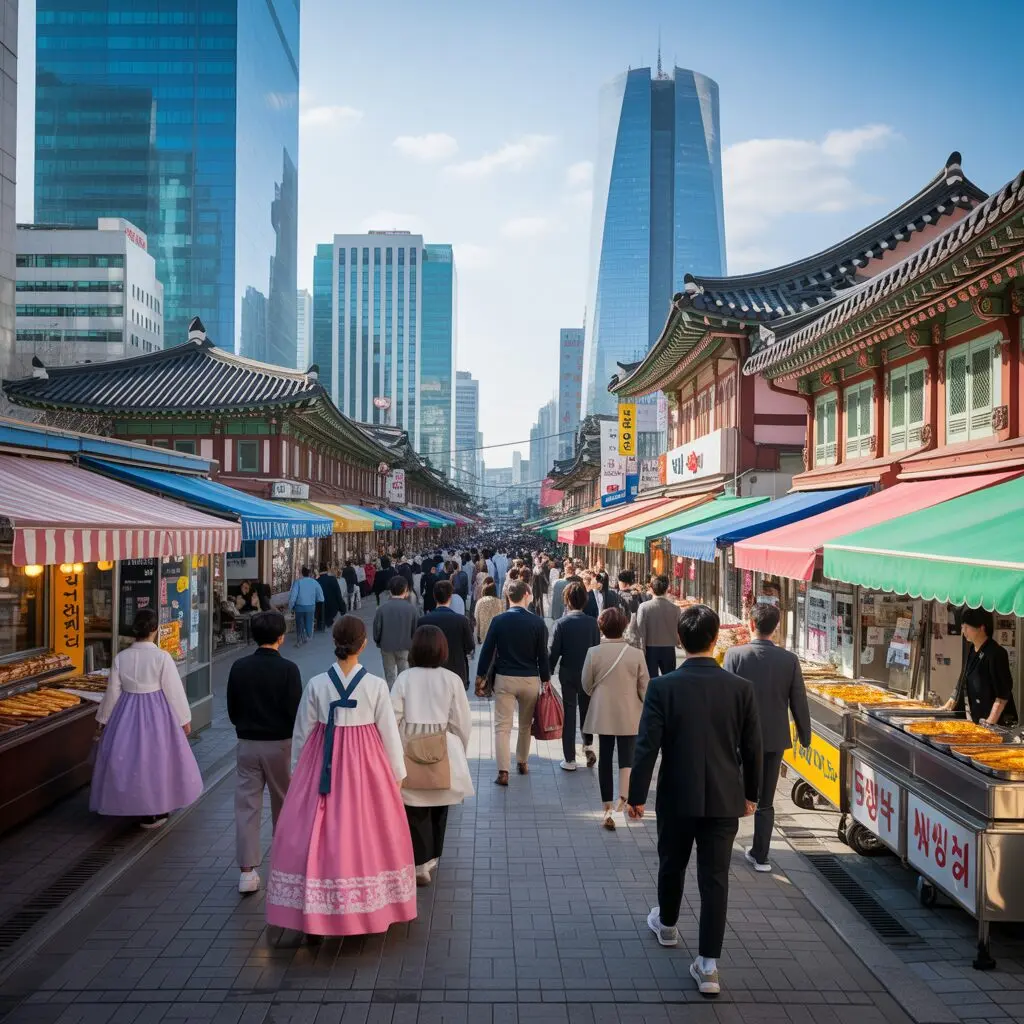
South Korea is one of Asia’s most exciting travel destinations in 2026 – a country where ancient temples stand alongside glass skyscrapers, where street food vendors serve meals that rival Michelin-starred restaurants, and where the latest technology exists in harmony with centuries-old traditions. This South Korea travel guide for 2026 covers everything you need to know before your trip, from entry requirements and visa information to top attractions, best times to visit, and practical travel tips.
Entry Requirements for South Korea in 2026
Before planning your trip, confirm your entry requirements. Most major nationalities – including US, UK, EU, and Australian citizens – are currently exempt from the kETA (Korean Electronic Travel Authorization) through December 31, 2026. This means you can enter South Korea visa-free without any pre-travel authorization.
However, all travelers must complete the mandatory K-ETA e-Arrival Card before their flight arrives in Korea. This digital form is submitted at k-eta.go.kr and replaces the old paper arrival cards. It is free and takes about 10 minutes to complete. See our full Korea entry requirements 2026 guide for details.
If your nationality is not covered by the exemption or if you need kETA, the kETA application costs only KRW 10,000 (~$7.50 USD) and processes in minutes.
Best Time to Visit South Korea
South Korea has four distinct seasons, each offering a different experience:
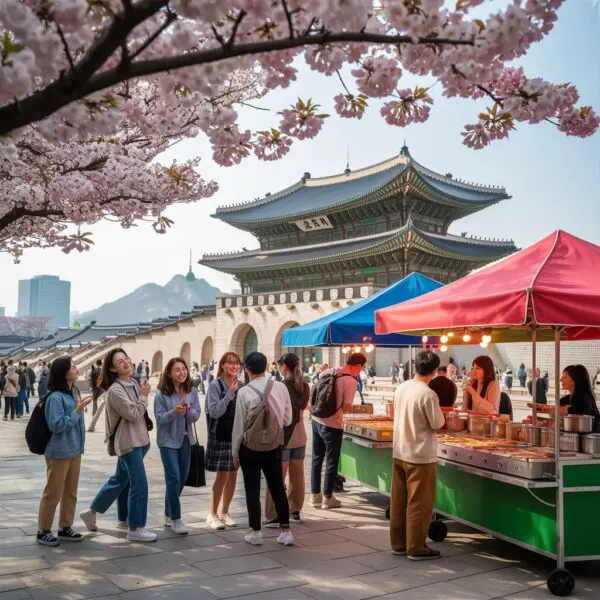
- Spring (March – May): The most popular time to visit. Cherry blossoms transform parks and streets into pink landscapes. Temperatures are mild (10-20°C), making sightseeing comfortable. Book well in advance.
- Summer (June – August): Hot and humid, with temperatures reaching 30-35°C. The monsoon season (late June to mid-July) brings heavy rainfall. Summer is peak beach season on the coasts and Jeju Island.
- Autumn (September – November): Arguably the best time to visit. Crisp air, stunning foliage in reds and golds, and comfortable temperatures (10-20°C). Excellent for hiking and outdoor activities.
- Winter (December – February): Cold, with temperatures dropping below 0°C in Seoul. Snow is possible. Great for skiing in Gangwon-do and experiencing Korean winter festivals. Spring brings the lowest accommodation prices.
Top Destinations in South Korea
Seoul – The Vibrant Capital
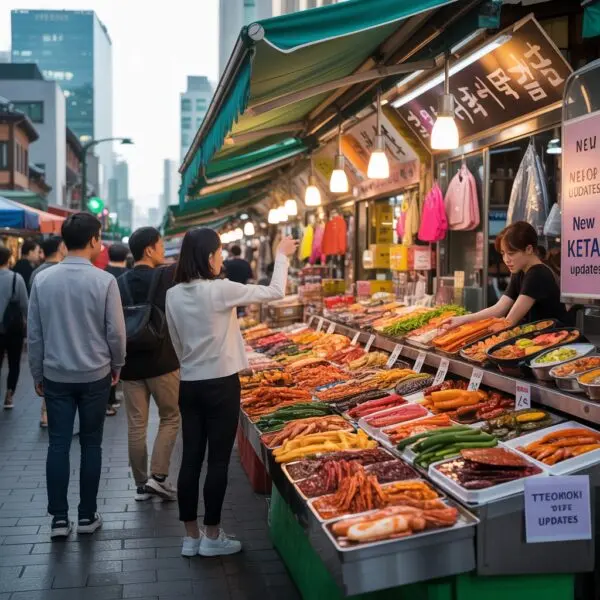
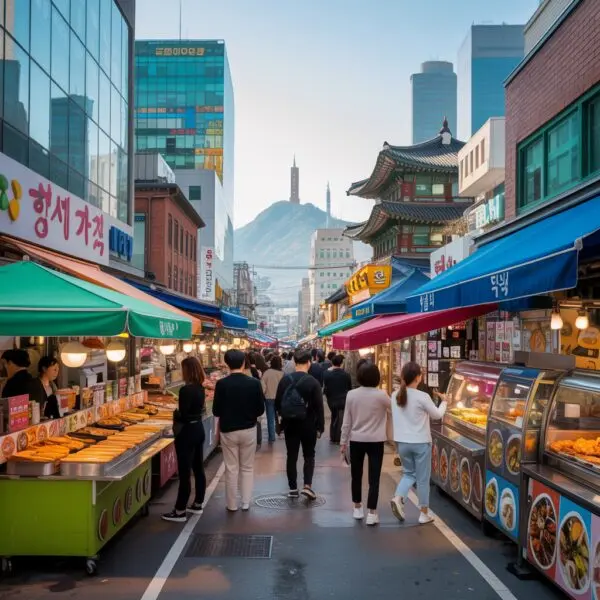
Seoul is South Korea’s beating heart – a megacity of 10 million people that blends modernity and tradition effortlessly. Highlights include Gyeongbokgung Palace, Bukchon Hanok Village (traditional Korean houses), Myeongdong shopping district, Insadong’s artisan galleries, and the futuristic Dongdaemun Design Plaza. Seoul’s street food scene – from tteokbokki (spicy rice cakes) to pajeon (savory pancakes) – is legendary. See our dedicated Seoul travel guide for in-depth coverage.
Busan – The Coastal Gem
South Korea’s second-largest city sits on the southeastern coast and offers a completely different character from Seoul. Haeundae Beach is one of Asia’s most famous stretches of sand. The Gamcheon Culture Village’s colorful hillside houses make for extraordinary photos. The Jagalchi Fish Market is the largest seafood market in Korea. Busan is accessible via KTX high-speed train from Seoul in under 3 hours.
Gyeongju – The Museum Without Walls
Once the capital of the ancient Silla Kingdom, Gyeongju is literally an open-air museum. The city is dotted with burial mounds, ancient temples (including Bulguksa, a UNESCO World Heritage Site), and the stunning Anapji Pond. It is a must-visit for history enthusiasts.
Jeju Island – Korea’s Island Paradise
South Korea’s largest island and a UNESCO World Heritage Site, Jeju offers volcanic landscapes, lava caves, tangerine groves, and beaches. Hallasan Mountain (1,950m) at the island’s center is South Korea’s highest peak. Seongsan Ilchulbong (Sunrise Peak) offers spectacular views. See our dedicated Jeju Island guide for full details.
Getting Around South Korea
South Korea has one of Asia’s most efficient public transportation systems:
- KTX High-Speed Rail: Connects Seoul with Busan (2h45m), Daegu, Daejeon, and other major cities at speeds up to 300 km/h.
- Seoul Metro: An extensive subway network with 9 lines covering the entire capital and surrounding areas. Operates 5:30am – midnight.
- Intercity Buses: Affordable and extensive network connecting all cities and rural areas.
- T-Money Card: Rechargeable transport card used on subways, buses, and taxis in Seoul and other cities.
Korean Cuisine – What to Eat
Korean food is one of the world’s great cuisines. Must-try dishes include:
- Korean BBQ (Gogi-gui): Grilling meat at your table – galbi (ribs), samgyeopsal (pork belly), bulgogi (marinated beef)
- Bibimbap: Colorful rice bowl with vegetables, egg, and gochujang (chili paste)
- Kimchi: Fermented vegetables (usually cabbage) – Korea’s national side dish
- Ramyeon: Korean instant noodles, elevated far beyond the cup variety
- Pajeon: Savory green onion pancakes, perfect with rice wine (makgeolli)
- Chimaek: Fried chicken (chikin) paired with cold beer (maekju) – a national institution
Practical Information
- Currency: Korean Won (KRW). 1 USD ≈ 1,370 KRW in 2026.
- Language: Korean (Hangul). English is widely spoken in tourist areas and hotels.
- Time Zone: Korea Standard Time (KST) = UTC+9.
- Electricity: 220V, Type C/F plugs. Adaptors needed for US/UK appliances.
- Emergency: Police 112, Fire/Ambulance 119, Tourist Hotline 1330.
Frequently Asked Questions
Is South Korea safe to travel in 2026?
Yes – South Korea consistently ranks among the world’s safest countries for travelers. Crime rates are low, medical facilities are excellent, and the country is politically stable. Standard precautions apply as with any destination.
Do I need a visa to visit South Korea?
Citizens of most Western countries can enter South Korea visa-free. US, UK, EU, and Australian citizens are also exempt from kETA through December 31, 2026. See our eligible countries guide.
How many days do I need to visit South Korea?
A minimum of 7-10 days is recommended to explore Seoul and one or two other destinations like Busan or Gyeongju. For a comprehensive trip including Jeju Island, allow 14+ days.