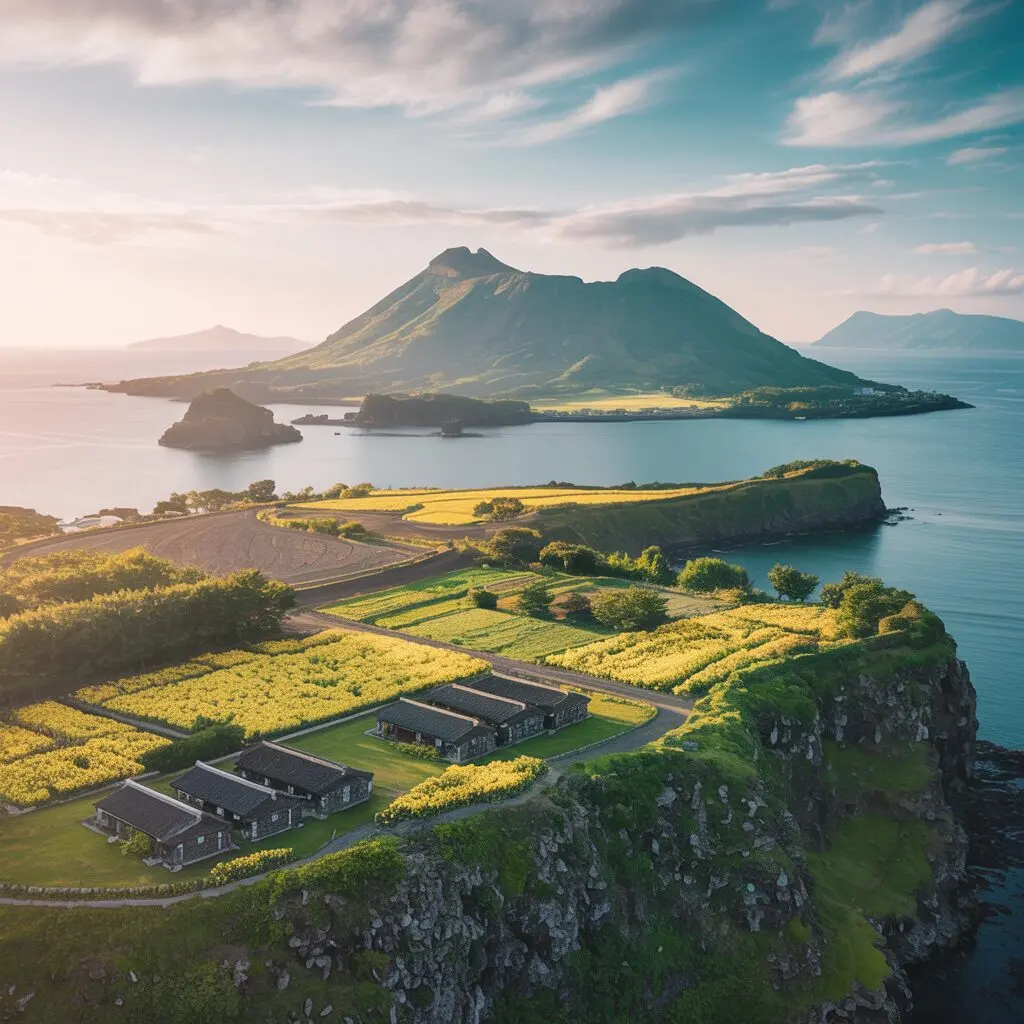
Jeju Island (제주도) is South Korea’s crown jewel – a volcanic island paradise off the southern coast that offers a completely different experience from mainland Korea. With its UNESCO World Heritage volcanic landscape, emerald waters, dramatic sea cliffs, lava tubes, and laid-back atmosphere, Jeju deserves far more than a day trip. This Jeju Island travel guide covers everything you need to plan the perfect Jeju visit in 2026.
Getting to Jeju Island
Jeju is accessible by plane from Seoul’s Gimpo Airport (GMP) – the Seoul-Jeju route is one of the busiest domestic air routes in the world. The flight takes approximately 1 hour. Asiana, Korean Air, Jeju Air, and other budget carriers operate multiple daily flights. Advance booking (especially during spring and autumn) is essential.
Ferries also connect Jeju to several mainland ports including Mokpo, Busan, and Wando, but the journey takes several hours and is less convenient than flying.
Regarding entry requirements: Jeju has a unique visa-free policy for international visitors – most foreigners can visit Jeju without any visa or kETA simply by flying directly to Jeju International Airport. However, if you plan to enter mainland Korea from Jeju, standard kETA and visa rules apply. For trips that involve Jeju only, check the specific Jeju visa-free rules.
Best Time to Visit Jeju
Jeju can be visited year-round, but certain seasons are particularly special:
- Spring (March-May): Cherry blossoms and yellow canola (rapeseed) flowers create a spectacular landscape. March-April is the most photogenic period.
- Summer (June-August): Peak beach season. Jeju’s beaches – Hyeopjae, Hamdeok, Jungmun – are at their finest. Hot and humid; book accommodation far in advance.
- Autumn (September-November): Comfortable temperatures and beautiful foliage on Hallasan Mountain.
- Winter (December-February): Jeju is warmer than the mainland. The haenyeo (sea women) are most active in winter, and the island is much less crowded.
Jeju’s UNESCO World Heritage Sites
Jeju has a triple UNESCO World Heritage designation – one of only a handful of places in the world to hold this distinction. The three sites are:
Hallasan National Park
Hallasan (1,950m) is South Korea’s highest mountain and the ancient volcano at the heart of Jeju Island. The peak is often shrouded in clouds, but on clear days the views are extraordinary. Several hiking trails lead to the summit crater lake (Baengnokdam). The Eorimok and Gwaneumsa trails are the most popular routes. Allow 5-8 hours for the round trip. Note: the summit is only accessible via the Gwaneumsa and Seongpanak trails.
Geomunoreum Lava Tube System
The Geomunoreum lava tube system is one of the world’s most impressive cave systems formed by volcanic activity. The most accessible section open to visitors is Manjang Cave (Manjanggul) – a 13.4km lava tube of which 1km is open to the public. The cave features massive lava columns, stalactites, and strange formations created as ancient lava cooled. A UNESCO World Heritage Site since 2007.
Seongsan Ilchulbong (Sunrise Peak)
Seongsan Ilchulbong is a 182m tuff cone formed by a submarine volcanic eruption 100,000 years ago. Its distinctive crown of basalt columns rising from the sea is one of Korea’s most iconic images. The summit offers panoramic ocean views and, as the name suggests, spectacular sunrises. Best visited early morning. The hike to the top takes about 30-40 minutes.
Jeju’s Best Beaches
- Hyeopjae Beach: White sand, turquoise water, and a pine forest backdrop. The most scenic beach on the western coast.
- Hamdeok Beach: Crystal-clear water and a rocky volcanic coastline. Popular for snorkeling.
- Jungmun Saekdal Beach: The island’s premier resort beach, backed by the Jungmun Resort complex with luxury hotels.
- Udo Island: A small island just off Jeju’s east coast, accessible by ferry. Home to coral sand beaches with breathtaking ocean views.
Unique Jeju Experiences
Watch the Haenyeo (Sea Women)
Jeju’s haenyeo are female free-divers who harvest abalone, sea urchin, octopus, and other seafood without diving equipment, diving to depths of 10-20m. Recognized as a UNESCO Intangible Cultural Heritage, the haenyeo tradition is unique to Jeju. Watch them work at fishing villages like Seongsan or Udo Island, or visit the Haenyeo Museum in Gujwa-eup for the full story.
Jeju Black Pork (Heukdwaeji)
Jeju’s black pig is a unique breed native to the island, producing pork with a distinctive flavor and texture. Grilled Jeju black pork is the island’s signature dish – find it at restaurants throughout Jeju City’s Heukdwaeji Street. It is best enjoyed with Jeju soju (a lighter, slightly sweeter version of mainland soju).
Jeju Tangerine Orchards
Jeju produces the majority of South Korea’s tangerines. In autumn and winter, the island’s hillsides are dotted with tangerine orchards bursting with bright orange fruit. Many farms offer picking experiences where visitors can harvest their own tangerines and eat them fresh on the spot.
Getting Around Jeju
Jeju’s public bus network is efficient but limited for reaching off-the-beaten-path attractions. Renting a car is highly recommended for flexible exploration – Jeju has many international car rental agencies and the island’s roads are well-maintained. Scooters and bicycles are also available for rent. Taxis are affordable and can be booked via Kakao T.
Frequently Asked Questions
Do international visitors need a visa for Jeju Island?
Jeju has a special visa-free policy for most international visitors arriving directly at Jeju International Airport. However, if you plan to visit mainland South Korea as well, standard entry rules (including kETA or visa requirements) apply. Check our kETA eligible countries page for your nationality.
How many days do I need on Jeju Island?
Three to four days is the minimum to cover Jeju’s highlights including Hallasan, Seongsan Ilchulbong, Manjanggul Cave, and beaches. Five to seven days allows for a more relaxed pace and exploration of lesser-known areas.
Is Jeju Island worth visiting in 2026?
Absolutely – Jeju is one of Asia’s most unique destinations, combining volcanic landscapes, pristine beaches, UNESCO heritage sites, and distinctive culture. It is genuinely different from anywhere else in Korea or Asia.
What is the best way to get from Seoul to Jeju?
Fly from Seoul’s Gimpo Airport (GMP) to Jeju International Airport (CJU). The flight takes about 1 hour and there are dozens of daily departures. Budget airline Jeju Air, T’way Air, and Jin Air offer affordable fares if booked in advance.